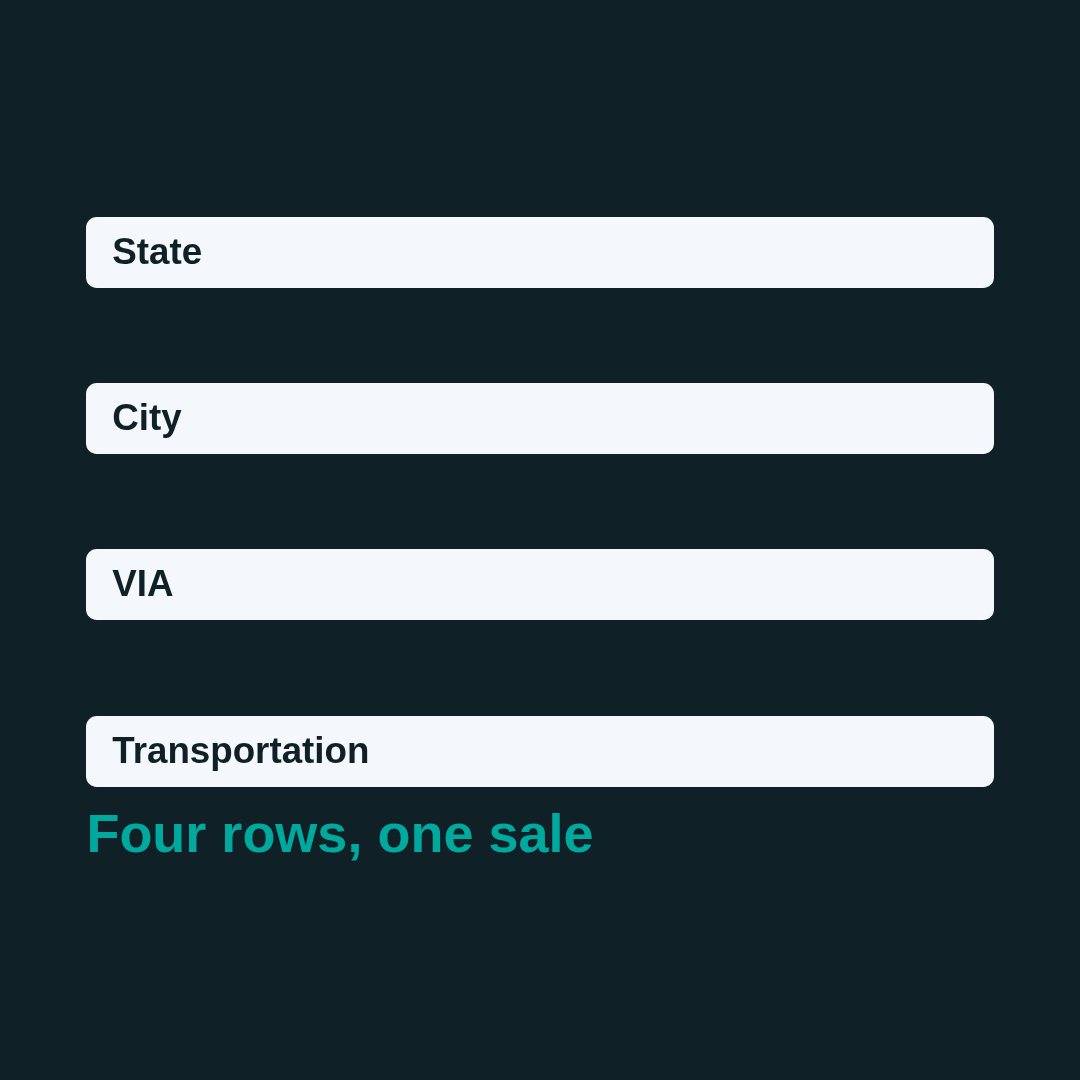
The blank on the form

San Antonio accounting firm alternative.

Answer four quick questions about the form in front of you. A directory listing does not close the month.

A river path and a closed month.

Question 1 of 4

What is the form actually asking for?

Question 2 of 4

What is inside a city sale?

Question 3 of 4

Who would a reviewer find?

Question 4 of 4

When does the form need the name?

A quick check

Does the blank demand an attest signature?

A bid or a lender packet often says accounting firm because the author copied a line. An audit, a review, or a compilation is a report an outsider relies on, and only a licensed CPA firm may sign it. The four rows inside an 8.25 percent San Antonio sale are not that signature. They are a month that has to be named.

The name that belongs on that line is a Tax CFO.

Steven Palmieri works as a Tax CFO on this San Antonio address. He closes the month until the books match the bank statement, labels each row in a city sale, and sets payday on the provider you run. The free call looks at the form you were handed and says whether that help fills the blank.

You will be talking to the Steven Palmieri practice.

Next you pick a time for a free video call with the Steven Palmieri practice. Nothing to sign, nothing to pay.

Prefer to read first? It's all below ↓

Accounting Firms San Antonio AlternativeThe books closed, payroll set up, the return

We keep the books, set payroll up on a provider you run, and prepare the return from those months. For owners who found this San Antonio address, Steven Palmieri does that work with you. Owners call him the Entrepreneur's CFO, and the form carries the Tax CFO title.

The River Walk runs a level below the street. We ask which weekend's deposits still need a closed month.


The San Antonio River Walk, a stone path under cypress a level below the street
Accounting Firms San Antonio on the opening frame
Send the month

Which month should we close first.

Steven Palmieri, Tax CFO

You will be talking to the Steven Palmieri practice.

Our side of the video call is in the Dallas office.
An accounting firm puts a name on the line. A Tax CFO puts a closed month behind it.

A firm's name on the form is a formality. What the reviewer can use is a month the bank already matches and a return built from it. The Tax CFO closes those months, goes through them with you, and plans October from them. We write Steven Palmieri on the form. The month behind it is the point.

Open that month

Which trouble is in front of you.

Open a row.

  1. 1Deposits still do not match the bank.

    We open the newest statement that already ties and walk forward from that page.

    A month the bank has not accepted is a number a reviewer will unwind.

  2. 2Payday still has no provider.

    We open the provider account in your name and stop there.

    Once that provider account is open, the weekly run stays on your login. This practice does not keep payday.

  3. 3A form still needs someone named for the books.

    We can tell you which closed month that form can honestly cite.

    Naming someone does not help if August is still an open set of books.

  4. 4A form asks for a signature this practice does not give.

    We say that signature is outside this practice before any scope is written.

    Disclosures is the page that names the signature we do not give.

  5. 5The VIA row is still missing.

    We record the city piece, the VIA piece, and the transportation district as separate rows.

    A downtown sale is not one flat Texas rate, and the form almost never lists the VIA piece.

  6. 6Both returns are still open.

    We prepare both from the same months once those months tie to the bank.

    Two returns that describe one year should not tell two different stories about owner pay.

Name the trouble

Which month should we close.

Which month should the bank already match.

Start with the newest month whose deposits already match the bank statement.

Steven Palmieri, Tax CFO

You will be talking to the Steven Palmieri practice.

The month you can still stand behind.

A reviewer can use a month the bank already matches.

The month we talk about on the call is the one that gets closed, and the return waits until that month matches the bank statement.

Some owners show up with months that look calm and a bank balance they still do not believe. The return can look nearly done while nobody has talked about owner pay, a slow quarter, or a weekend of deposits that never got a name.

We begin with the newest month the bank already accepts. Older months are repaired after that, so a bid does not sit idle while someone hunts for a perfect history.

A finished month is the one where the bank activity and the ledger already agree. You leave with statements and a short note of whatever is still open. That note is part of the close. Hiding it is how a bid falls apart in the second meeting.

Fiesta in April has been this city's festival since 1891. That week the register will not sit still. The close does not smooth the spike into the quieter weeks around it. Those deposits get their own lines.

What a first month still has to cover.

Older months are repaired where the bank and the ledger still part ways. We lock the month you are living in before weekend card sales turn into a story nobody can retell. Before the year ends we talk about the choices that are still open, in plain sentences.

Payroll is set up on a provider that stays in your name, and payday stays your job after that opening. The provider account is opened in your name, and Friday's run stays on your login. That opening does not grow into a second job.

Once those months tie to the bank, the return is built from them. If a letter asks for an audit signature, we say so before a scope is written. That limit is spelled out on Disclosures.

A Spurs night at Frost Bank Center.

A Friday night when the Spurs play at Frost Bank Center, the arena on the east side that opened in 2002, fills the parking lot. A full parking lot on Friday still becomes a list of deposits on Monday.

You see the game. We see card batches, extra hourly wages, and a Monday when the bank is louder than the books. The close does not wait for the season to calm down. It gives that loud weekend its own lines and moves on.

A late plate at Market Square.

Mi Tierra sits inside Market Square, and a late plate there is still a Friday of card sales. The pleasure is the meal. The work is the question that follows. Which of those card batches are sales, and which are something else that landed in the same deposit.

Owners who serve food already know a Friday can look like a good week and still be a mess on Monday. A photograph of Market Square would not sort a food sale from a gift card inside the same deposit. That deposit still has to land on a month you can explain.

What a first month costs.

The fee follows the month we can actually see. Transaction volume, how many months are still open, and whether the return is included all change it. A figure named before that look would be a guess, and a guess does not belong on a bid.

You hear the fee before anything is signed, and we will say when this is the wrong practice for the request. Catching up older months is a separate price. A repeating close gets a price only after one real month has been in our hands.

The form is only a note, and the work waits for a signed scope. A written scope is the next step, once you have heard the fee and you have chosen the month you want closed.

The Arneson River Theater, built by 1941.

The Arneson River Theater is the open air stage on the river, built from 1939 to 1941. When you see that stone you see a night out. We start counting the years the stone has been standing and ask what the books would still show for a building that old. That is the same question a bid is quietly asking about your equipment, your leasehold, and the truck you bought in March.

You do not have to love the question. You do have to have an answer that matches the bank, or the second meeting on the bid becomes a hunt for a number nobody wrote down.